SLICE Manual Knife Safety Blade Utility 313022177101
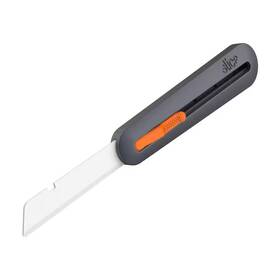
( Brand: Slice ), ( Part Type: Blade Manual Knife ), ( Blade Edge Type: Straight Edge ), ( Blade Material: Ceramic ), ( Features: Retractable Blade ), ( Hand Tool Type: Utility Knife ), ( Handle Material: Nylon ), ( Individual/set: Individual ), ( Lock Type: Non-locking ), ( Returnable: 90-day ), ( Manufacturer Warranty: Warranty For Defect ), ( Blade Length: In ), ( UPC: 313022177101 )
Review SLICE Manual Industrial Knife Inch Safety Blade Utility
The **Slice 313022177101 Manual Knife Safety Blade Utility** is a precision-engineered, ergonomically designed tool crafted for professionals and DIY enthusiasts who demand both efficiency and safety in their cutting tasks. This high-performance utility knife features a **durable, high-carbon stainless steel blade** that combines exceptional sharpness with remarkable resistance to corrosion and wear, ensuring longevity even with frequent use. The blade is housed within a **smooth, contoured handle** that prioritizes comfort and control, allowing for extended periods of use without fatigue, while its **ambidextrous design** accommodates both left- and right-handed users seamlessly. A standout feature of this knife is its **manual safety mechanism**, which secures the blade in a locked position when not in use, preventing accidental cuts and injuries ideal for environments where safety is paramount, such as workshops, kitchens, or construction sites. The **quick-release mechanism** enables effortless blade deployment with a single press, making it incredibly versatile for tasks ranging from precise trimming and scoring to heavy-duty utility work. Additionally, the knife s **compact yet sturdy build** ensures portability without compromising on performance, making it a reliable companion for on-the-go professionals. Whether used for crafting, packaging, or general maintenance, the Slice 313022177101 delivers a perfect balance of power, precision, and user-friendly innovation, setting a new standard for utility knives in both functionality and safety.
### Pros and Cons of buying a **Slice 313022177101 Manual Knife Safety Blade Utility**
#### **Pros:**1. **Manual Operation** Unlike electric or hydraulic models, this tool relies on manual effort, which can be more cost-effective in the long run as it eliminates the need for electricity or fuel. It also reduces reliance on power sources, making it more portable and versatile for use in various locations.
2. **Safety Features** The term "safety blade" suggests that the tool is designed with user protection in mind, likely featuring mechanisms to prevent accidental cuts or slips. This could include features like blade guards, ergonomic handles, or controlled cutting motions.
3. **Utility Versatility** As a "utility" knife, this tool is likely designed for general-purpose tasks such as cutting, trimming, or shaping materials like wood, metal, or plastic. Its adaptability makes it useful for DIY projects, maintenance work, or light industrial applications.
4. **Durability** The product number and branding suggest it may be a mid-to-high-quality tool, potentially built to last with sturdy materials like steel or reinforced plastics. A well-constructed tool can save money over time by reducing the need for frequent replacements.
5. **Portability** Being manual, this tool is likely lightweight and easy to carry, making it suitable for on-the-go use or jobs that require mobility. It may not require a power cord or bulky attachments, further enhancing its convenience.
6. **Low Maintenance** Manual tools typically require minimal upkeep compared to electric or hydraulic alternatives. No oil changes, filter replacements, or complex servicing are usually needed, simplifying maintenance routines.
7. **Cost-Effective Initial Purchase** Manual tools often have a lower upfront cost than their powered counterparts, making them accessible for budget-conscious buyers or those who do not require high-speed or heavy-duty performance.
---
#### **Cons:**1. **Physical Effort Required** Manual operation means the user must apply force to operate the blade, which can be tiring for prolonged or repetitive tasks. This may limit productivity compared to powered tools that automate the cutting process.
2. **Slower Operation** Without motorized assistance, tasks that require rapid or continuous cutting will take longer to complete. This could be a drawback for large-scale projects or time-sensitive work.
3. **Limited Power** Manual tools are generally less powerful than electric or hydraulic versions, meaning they may struggle with tougher materials, thick cuts, or stubborn resistance. Precision or deep cuts might require more effort and skill.
4. **Skill Dependency** Effective use of a manual utility knife often depends on the user s technique and strength. Poor handling could lead to uneven cuts, accidents, or fatigue, whereas powered tools can provide consistent results with less effort.
5. **Less Precision for Complex Work** While manual tools can be precise, they may lack the fine control or repeatability of automated systems, especially for intricate or detailed work. Powered tools with adjustable speeds or guides can offer better accuracy in such cases.
6. **Potential for User Error** Despite safety features, manual tools still rely on the user to operate them correctly. Misuse such as forcing the blade or neglecting safety precautions could lead to injuries or damage to the tool.
7. **Limited Specialization** If the tool is designed for general utility, it may not excel in specialized tasks that require niche features (e.g., high-speed metal cutting, deep grooving, or automated feeding). Investing in a specialized tool might be better for specific needs.
8. **Wear and Tear Over Time** While durable, manual tools are still subject to wear from repeated use. The blade may dull over time, requiring sharpening or replacement, and the handle or mechanism could degrade with heavy use.
---
### **Conclusion:**The **Slice 313022177101 Manual Knife Safety Blade Utility** appears to be a practical choice for users who prioritize simplicity, portability, and cost-effectiveness over speed and power. Its manual operation makes it ideal for occasional or light-duty tasks where precision and safety are important, such as DIY projects, maintenance, or general workshop use. However, it may not be suitable for heavy-duty, high-volume, or time-sensitive work where powered tools would offer greater efficiency.
The tool s safety features and durability suggest it is designed with user convenience in mind, but its limitations in power and speed should be considered based on the user s specific needs. If the primary use involves frequent or demanding cutting tasks, a powered alternative might be more efficient in the long run.
---
### **Recommendation:** **Buy this tool if:**- You need a versatile, portable, and low-maintenance cutting tool for occasional or light-duty use.
- You prioritize safety and ease of use over speed and power.
- Your budget is limited, and you prefer a manual tool to avoid the costs of electricity or fuel.
- You work on projects that require precision but not high-volume output (e.g., woodworking, trimming, or general maintenance).
**Avoid this tool if:**- You require high-speed or heavy-duty cutting for materials like thick metal or dense wood.
- Your work involves repetitive tasks that would benefit from automated or motorized assistance.
- You need specialized features (e.g., adjustable depth, automated feeding) that manual tools cannot provide.
- You frequently work in environments where physical strain is a concern, and a powered tool would reduce fatigue.
**Alternative Considerations:**- If you need more power, consider an **electric jigsaw, reciprocating saw, or hydraulic cutting tool**.
- For precision work, a **manual coping saw or hacksaw** might be more suitable.
- If budget allows, invest in a **high-quality manual tool with ergonomic improvements** to enhance comfort and control.
Ultimately, the best choice depends on balancing your specific needs, workload, and long-term goals with the tool s capabilities.
Details:
Manual Industrial Knife 3 In. 100% Satisfaction, Satisfaction Guaranteed. Safety Blade Utility Knife.
specifications bladetoolsgo:
- brand: Slice
- part type: Blade Manual Knife
- blade edge type: Straight Edge
- blade material: Ceramic
- features: Retractable Blade
- hand tool type: Utility Knife
- handle material: Nylon
- individual/set: Individual
- lock type: Non-locking
- returnable: 90-day
- manufacturer warranty: Warranty For Defect
- blade length: In
- upc: 313022177101
general bladetoolsgo:
- Tools Workshop Equipment > Hand Tools > Knives Blades
- condition: New
seller bladetoolsgo:
- # reviews: 647
- rating: 100.0%
- city: Jacksonville, Florida
returns bladetoolsgo:
- method: Money back
- paid by: Buyer
- time: 30 Days
- policy: Returns Accepted
offer bladetoolsgo:
- started: May 11, 2026
- options: Ship-to-home
- sold: 0
- quantity: 1
- availability: In Stock
shipping bladetoolsgo:
- transit: 3-7 Days
- service: Standard
- type: Fixed
- class: Standard
- cost: $0.00
payments bladetoolsgo:
- wallet: Paypal
- credit card: Mastercard
- other
Slice 313022177101 Is Similar To:
- 00100 Slice 2 Green Safety Cutter (40.8% similar) You are purchasing 2 - Slice green safety cutters with ceramic micro-blades in paper blister packs free shipping...(March 11th, 2017)
- 10512 Slice Ceramic Blade Pen 895142105122 (26.8% similar) Experience great service and savings. Satisfaction guaranteed. This package contains one inch ceramic blade pen cutter. Does not sell or market customer information to other businesses organizations. Please using messaging. Please using messaging. The brand for quality consumer products. Includes a ...(April 4th, 2017)
- 10526 Slice Safety Blade Ceramic Round Point (38.6% similar) Shipped with USPS first class package. Condition is new. Slice safety blade,ceramic,round point...(June 16th, 2019)
- 10554 Slice Utility Knife Auto 895142105542 (23% similar) This is an auto retracting ceramic blade. Please review all pictures to determine the condition. The ceramic blade last 10 times longer than steel and its safer a metal. Utility knife from Slice. Buyer pays for shipping. I try to take detailed pictures and show all defects. This is brand new it was ...(May 21st, 2017)
- 431678 Slice 10524 Utility Knife 895142105245 (27.8% similar) Slice-ceramic replacement blades: utility. This package contains two 3/4 X2-3 8 inch ceramic utility blades. Only one opened item of the same product is eligible for return. Blades fit most standard utility knife handles. The perfect replacements for your ceramic box cutters. 55 Slice-ceramic ...(January 4th, 2018)
- 56sl1 Slice Cuts Paper Slide Blade Safety Cutter Blister 823019740022 (34.5% similar) Traditional metal blades. Metal blades are rated add a built-in magnet and key-ring hole, its two thumbs up for the Slice safety cutter. Harder edges maintain sharpness longer, cut better, and require replacement far less frequently. A portion of the purchase price Slice safety cutter is donated to ...(May 20th, 2018)
- 895142000106 Slice Ceramic Blade Mini Safety Cutter (36.4% similar) Measures 62 x 30 6MM and weights gm in traditional metal blades. 2, second only to diamonds. 5 on the mosh hardness scale compared to Slice ceramic blades at perfect for removing shrink-wrap, thin film, opening clam shell plastic packaging and flexible packaging, paper, paper rolls, more. Slice ...(October 5th, 2018)
- Gidds2-2474707 Slice Precision Cutter With Ceramic Blade Finger Friendly 097914446949 (28.4% similar) ...(July 17th, 2018)
- Gidds2-2474710 Slice Straight Edge Craft Blade Knife Replacement Ceramic 895142105184 (32.3% similar) Slice straight edge craft blade, knife replacement, ceramic stays sharp new product features 4 dual-sided blades per pack rounded-tips for added safety, non-conductive, non-magnetic, never-rusts chemically inert each blade lasts up to 10X longer than steel 1/2 0 metal less changes downtime injuries ...(December 23rd, 2018)
- S10550 Slice Smarty Series Manual 895142105504 (24.1% similar) This 6-1 4X3-1 2X1 inch package contains one knife and replacement blade. The utility knife is ambidextrous and easy to carry with its built in lanyard hole. Product info Slice smarty series manual utility knife grey orange Slice-smarty knife. This knife uses a ceramic blade for sharp and safe cuts...(June 18th, 2017)
- Sli-00200 Slice Products Ceramic Blade Mini Safety Cutter 895142000205 (34.3% similar) Ambidextrous design provides a comfortable grip for both left-handed and right-handed users. The extremely hard, ceramic blade provides a lasting sharp edge that maintains its sharpness, on average, 11. 30 OZ length 2. 2 times longer than an equivalent metal blade for consistently smooth cuts again...(November 2nd, 2018)